Inside the Box — building a PC with your child
Four sessions at a kitchen table with a screwdriver, an old machine or a box of new parts, and a child who ends up naming every component, mounting the board, routing the cables and working a fault tree when it does not start. Written for the adult beside them: what the child does, what you never let them touch, and where to stop.
- trending_upBeginner
- schedule5h 51m
- menu_book12টি পাঠ
- publicEnglish
- workspace_premiumBasic
ব্রিফিং
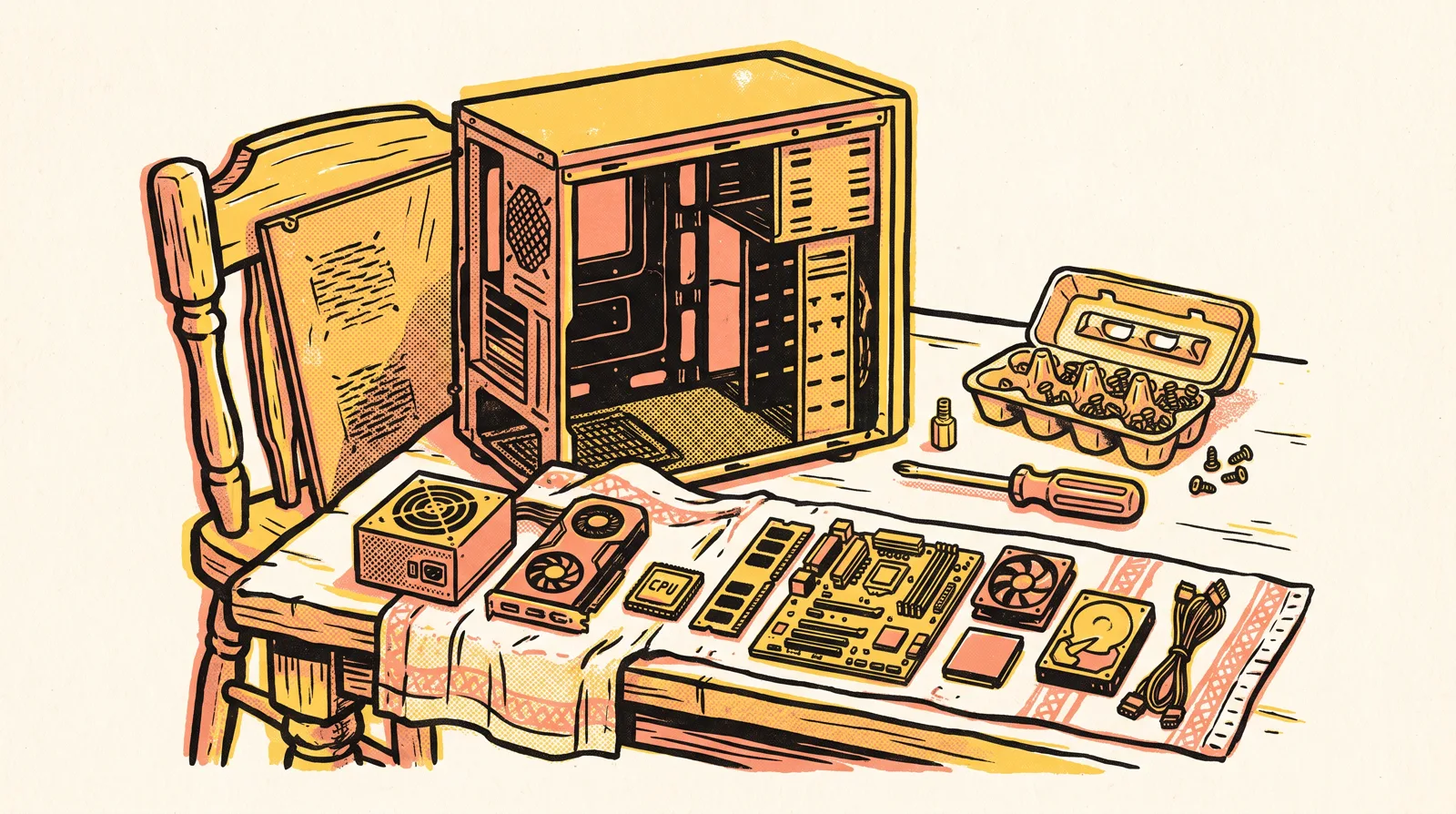
This is the segment that does not happen on a screen. A parent, a child, a cross-head screwdriver, and either a machine that has been in a cupboard since nobody remembers or a box of parts on the table. The order is deliberately backwards. Before anything is named, the case comes open and the child spends ten minutes pointing at things and getting them wrong, with the adult saying nothing. Only after that does each part get a real name and a one-sentence job. A child who has already held the power supply and felt how heavy it is does not need a diagram of one. Then it goes together: the brass spacers and the one extra spacer that kills a board silently, the memory that needs more force than anyone expects, the cooler tightened in a cross pattern, and the block of front-panel pins that has defeated people who do this for a living. Then it is switched on, and it does not work, because an adult sabotaged it beforehand. The child works a fault tree they drew themselves, one change at a time, writing down what they expected before each test. Safety is not a footnote here. Mains electricity is in the room. The power supply is never opened, by anyone, for any reason. Every hands-on lesson states plainly what the adult does and what the child does, and the unplug drill is rehearsed by the child before a panel comes off. The segment ends at the first successful power-on and not one step further. Putting an operating system on the drive is a different job in a different segment, and so is the exam theory behind what these parts are — this one is about metal, and every lesson has a path for a family with no spare machine and no budget.
কোর্স রূপরেখা · 4টি মডিউল
lockঅ্যাক্সেসের সঙ্গে আনলক হয়- 01 The Bench, and the Rules3টি পাঠ·1h 7m
You will want to open the case in the first ten minutes. Do not. The session that decides whether this works is the one where nothing is unscrewed: which machine, what happens if it never starts…
- 02 What Is In There3টি পাঠ·1h 17m
For the first ten minutes of the first session you say nothing at all. The child names things and gets several of them wrong, and the wrong answers are left standing until the next lesson tests them…
- 03 The Build3টি পাঠ·1h 46m
Two of these lessons contain a step that only an adult does, and one of them contains the single silent fault in this whole segment: one extra brass spacer under the board and the machine will not…
- 04 It Does Not Turn On3টি পাঠ·1h 41m
Two of these lessons are sabotaged before the child walks in, and you are the one who breaks the machine. That is deliberate: a set fault is a real fault with the timing chosen. Your job for the next…
প্রায়ই জিজ্ঞাসিত
- Inside the Box — building a PC with your child-এ আমি কী শিখব?
- Four sessions at a kitchen table with a screwdriver, an old machine or a box of new parts, and a child who ends up naming every component, mounting the board, routing the cables and working a fault tree when it does not start. Written for the adult beside them: what the child does, what you never le
- আমার কি পূর্ব অভিজ্ঞতা লাগবে?
- না — Inside the Box — building a PC with your child মৌলিক বিষয় থেকে শুরু হয় এবং শিক্ষানবিশদের জন্য উপযুক্ত।
- Inside the Box — building a PC with your child শেষ করতে কতক্ষণ লাগে?
- Inside the Box — building a PC with your child-এ 4টি মডিউল ও 12টি পাঠ রয়েছে। আপনি নিজের গতিতে শেখেন।
- আমি কীভাবে অ্যাক্সেস পাব?
- Inside the Box — building a PC with your child যেকোনো পেইড সাবস্ক্রিপশনের সঙ্গে অন্তর্ভুক্ত।
প্রোগ্রামিং-এ আরও